Atlassian | Flow without friction


I designed a cross-product concept consisting of three parts: a shared app bar, a task assistant called ATLAD, and improved roadmap visibility. Together, these ideas aimed to help users move more easily between Atlassian products, stay on top of updates, and feel more connected to their teammates.

About

My team placed as a finalist out of 40 teams.

Organisation: Atlassian (Hackathon)

Role: Product Designer

Skills: Product Strategy, User Research, Interaction, Visual Design, Prototyping, User Testing

Timeline: 72 hours
Background

Background


Atlassian is an Australian software company that develops product management tools such as Jira, Confluence, BitBucket, and Trello for teams. While these tools support different parts of team workflows, using several of them together can create friction, especially for distributed teams that rely on shared visibility and fast coordination.


My key role as a product designer include:

  • Applying design processes to identify the problem, ideate solutions, prototype, and implement the final product.

  • Creating prototypes on the Figma to visualise the design of our UX solution.

  • Lead design strategy through validated design methodology.


Atlassian is an Australian software company that develops product management tools such as Jira, Confluence, BitBucket, and Trello for teams. While these tools support different parts of team workflows, using several of them together can create friction, especially for distributed teams that rely on shared visibility and fast coordination.


My key role as a product designer include:

  • Applying design processes to identify the problem, ideate solutions, prototype, and implement the final product.

  • Creating prototypes on the Figma to visualise the design of our UX solution.

  • Lead design strategy through validated design methodology.

Identifying the problem

Identifying the problem


“How might we reduce friction across Atlassian products for distributed teams by making information, tasks, and team activity easier to access in one connected experience?”


We explored the problem space through primary research to identify different user pain points for Atlassian products. We then narrowed our focus to improving the ecosystem through smoother integration and improving cross-disciplinary communication.


“How might we reduce friction across Atlassian products for distributed teams by making information, tasks, and team activity easier to access in one connected experience?”


We explored the problem space through primary research to identify different user pain points for Atlassian products. We then narrowed our focus to improving the ecosystem through smoother integration and improving cross-disciplinary communication.

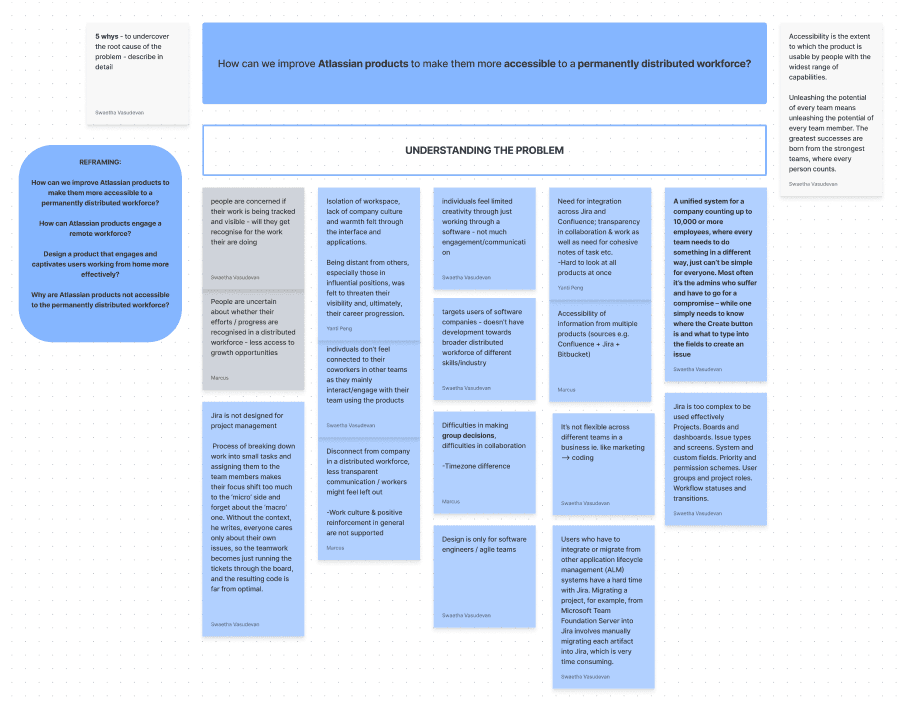
By trialing the products first-hand and conducting market research by investigating competitors, we found three themes that stood out.


  • Fragmented context: Users lacked transparency in collaboration and needed integration between platforms to work cohesively with teams. Important updates, tasks, and conversations were spread across different products.

  • High switching cost: Users felt that the software was not flexible across different teams in different industries and was complex to use.

  • Weak visibility: Users didn’t feel connected to their peers and weren’t engaging with their company’s culture.

By trialing the products first-hand and conducting market research by investigating competitors, we found three themes that stood out.


  • Fragmented context: Users lacked transparency in collaboration and needed integration between platforms to work cohesively with teams. Important updates, tasks, and conversations were spread across different products.

  • High switching cost: Users felt that the software was not flexible across different teams in different industries and was complex to use.

  • Weak visibility: Users didn’t feel connected to their peers and weren’t engaging with their company’s culture.

Product ideation

Product ideation


From these findings, we set three goals to design our solution on:


  • We want users to easily access information across different Atlassian products.

  • We want users of all industries & backgrounds to utilise the products easily, and allow the integrations to reduce workload and effort to take action.

  • We want users to build a connection with their co-workers and organisation, at any moment, in any place.


We then conducted a competitive analysis of product management tools across various competitors and industries, drawing insights from their key strengths and weaknesses to ideate visions for our solution.


From these findings, we set three goals to design our solution on:


  • We want users to easily access information across different Atlassian products.

  • We want users of all industries & backgrounds to utilise the products easily, and allow the integrations to reduce workload and effort to take action.

  • We want users to build a connection with their co-workers and organisation, at any moment, in any place.


We then conducted a competitive analysis of product management tools across various competitors and industries, drawing insights from their key strengths and weaknesses to ideate visions for our solution.

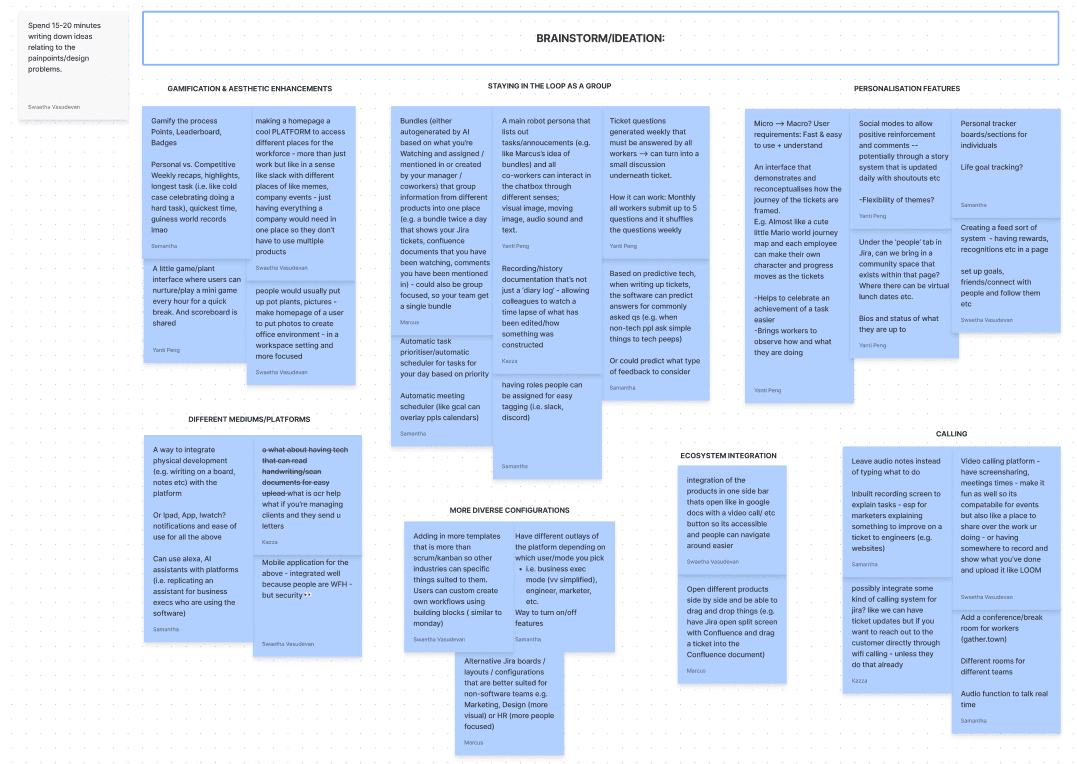
Brainstorming ways to address the three goals above, we then distilled the discussion into three key user stories that guided the design direction. Concepts were based on three criteria:


  • could it work across multiple Atlassian products?

  • would it reduce user effort in a meaningful way?

  • could it support a range of user needs?

Brainstorming ways to address the three goals above, we then distilled the discussion into three key user stories that guided the design direction. Concepts were based on three criteria:


  • could it work across multiple Atlassian products?

  • would it reduce user effort in a meaningful way?

  • could it support a range of user needs?

Rapid prototyping

Rapid prototyping


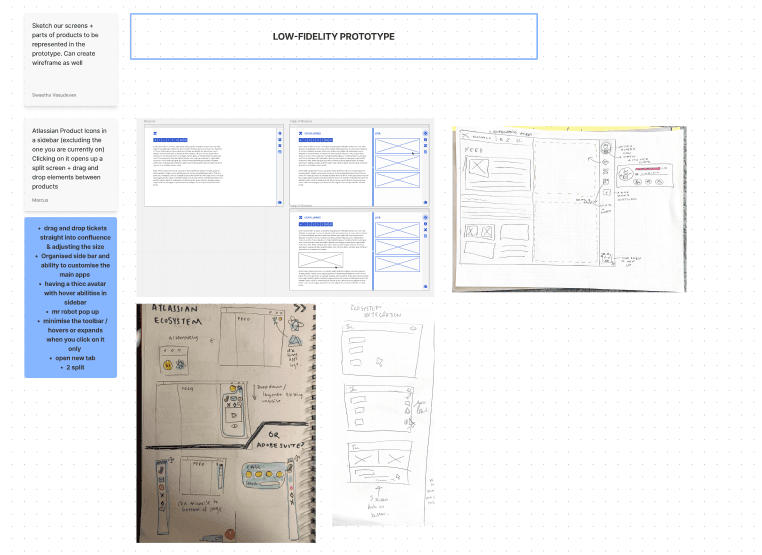
Starting by sketching low-fidelity concepts on paper, we explored how a cross-product experience could work without overwhelming the user or replacing the existing product interfaces. This stage helped us compare different layouts, flows, and interaction patterns. One of the main questions was how much of the cross-product experience should be visible at once.


We then reviewed them to identify the best user flow and find the common solution.


Starting by sketching low-fidelity concepts on paper, we explored how a cross-product experience could work without overwhelming the user or replacing the existing product interfaces. This stage helped us compare different layouts, flows, and interaction patterns. One of the main questions was how much of the cross-product experience should be visible at once.


We then reviewed them to identify the best user flow and find the common solution.

Usability

Usability


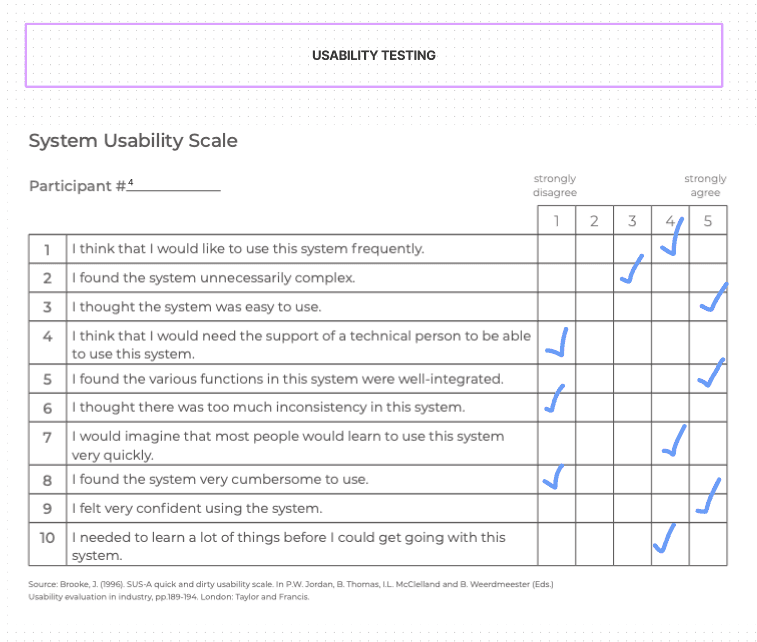
Using the following template, we conducted think-aloud usability sessions with existing Atlassian users to observe how they completed key tasks in our prototypes.


These lightweight sessions helped us identify several points of confusion:


  • some users were not immediately sure what the assistant was for

  • the relationship between the app bar and the active product needed to feel clearer

  • some cross-product interactions needed stronger cues to feel intuitive


Based on this feedback, we refined the structure of the interface, clarified how updates were grouped, and continued iterating to create a higher-fidelity prototype.


Using the following template, we conducted think-aloud usability sessions with existing Atlassian users to observe how they completed key tasks in our prototypes.


These lightweight sessions helped us identify several points of confusion:


  • some users were not immediately sure what the assistant was for

  • the relationship between the app bar and the active product needed to feel clearer

  • some cross-product interactions needed stronger cues to feel intuitive


Based on this feedback, we refined the structure of the interface, clarified how updates were grouped, and continued iterating to create a higher-fidelity prototype.

Final concept

Centralised access, ATLAD, user-centric roadmaps.

Centralising access to platforms

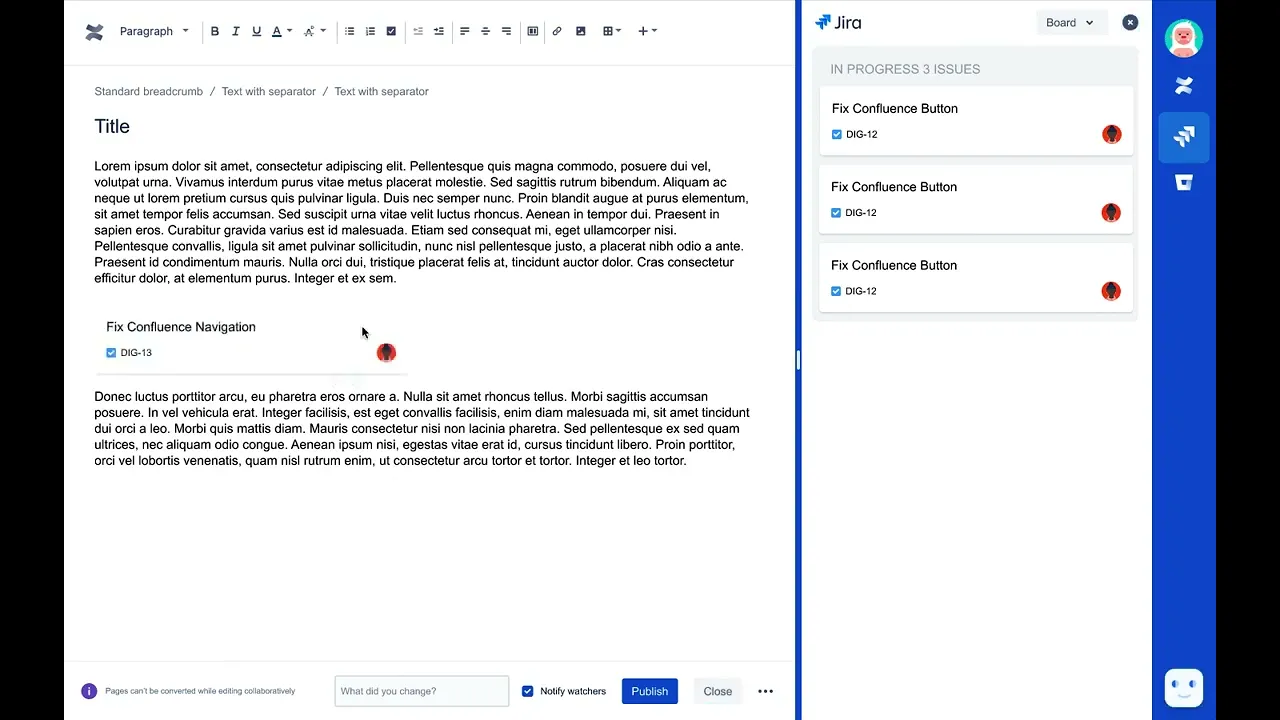
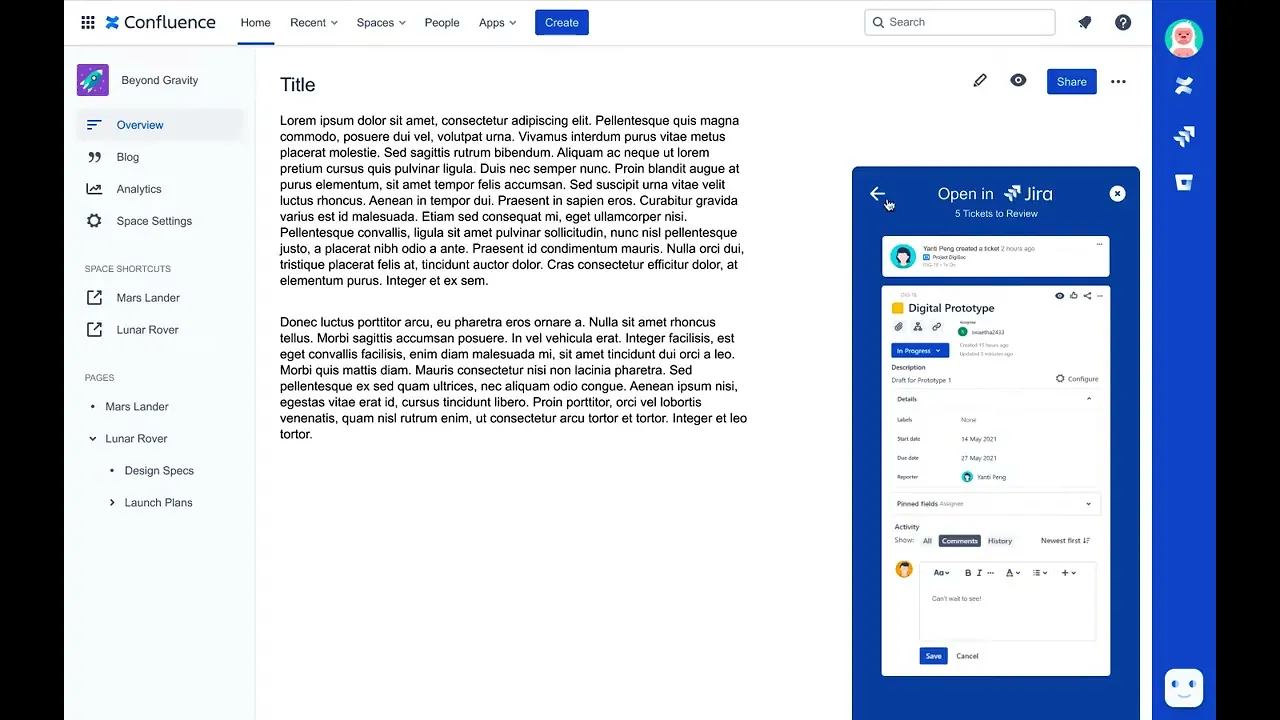
Users can access all Atlassian products through our centralised sidebar on the right side of the screen. This lets them work across products side by side, move between workflows more fluidly, and drag and drop elements between tools.


By making cross-product interactions more seamless, the sidebar reduces context switching and makes collaboration more visible and accessible.
ATLAD: Task and activity assistant

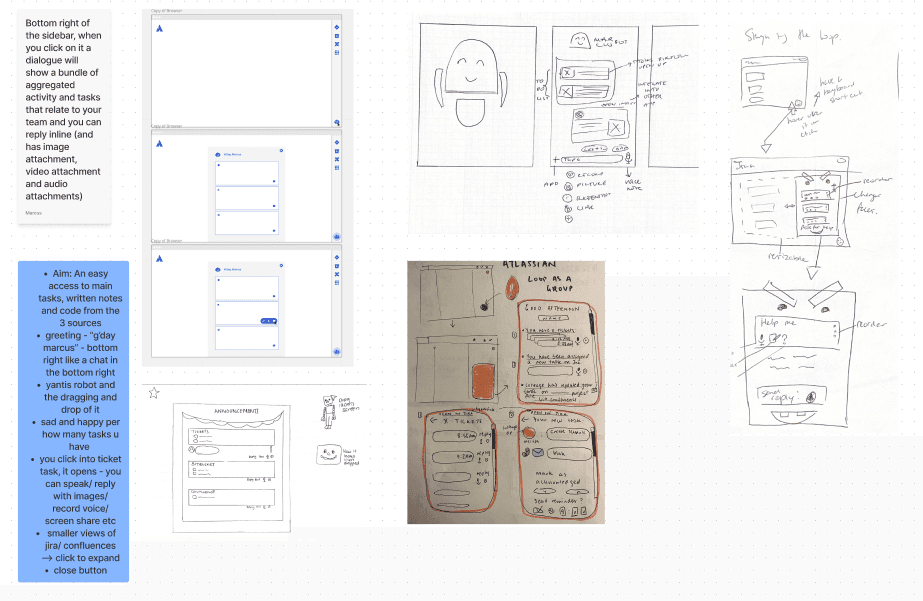
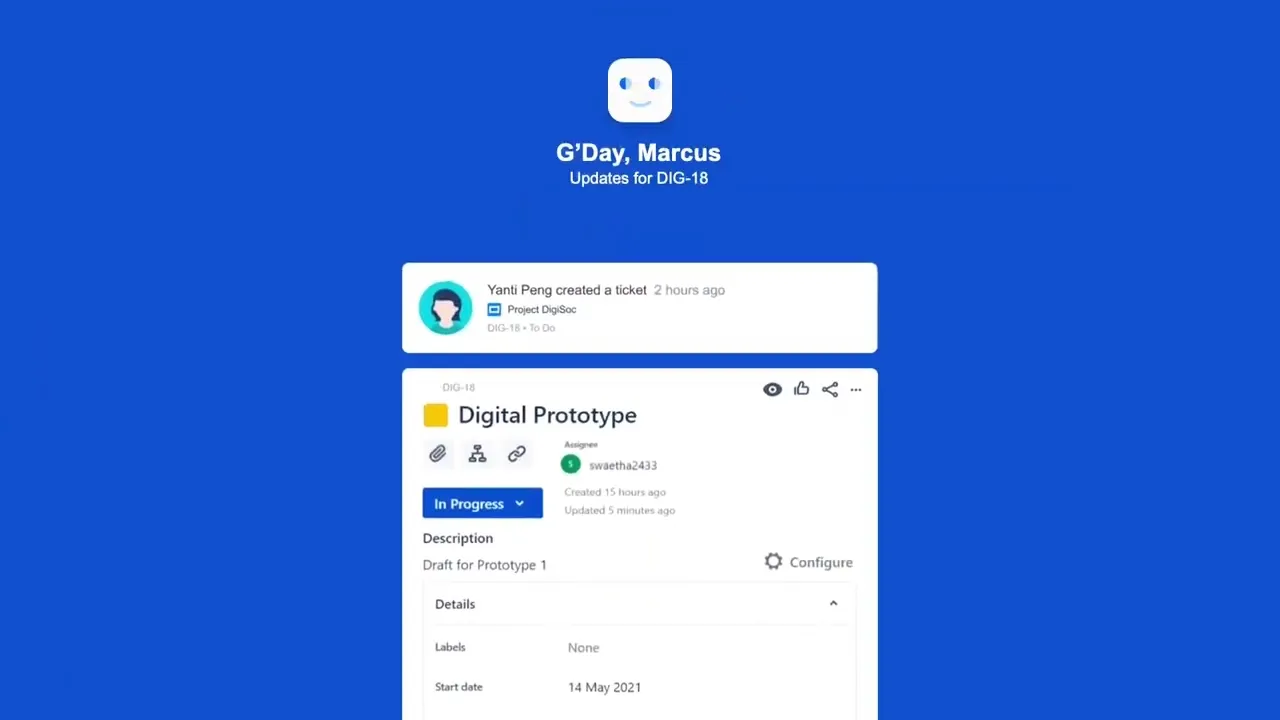
ATLAD gives users a single place to access aggregated activity and actionable items across Atlassian tools. By bringing updates together in one personal assistant, it helps them review what matters, respond more efficiently, and complete tasks directly.


Tasks and updates are grouped by product, making information easier to scan and act on. Because the assistant adapts to each person’s context, ATLAD helps close the gap between individuals, their work, and their team.
User-centric roadmaps

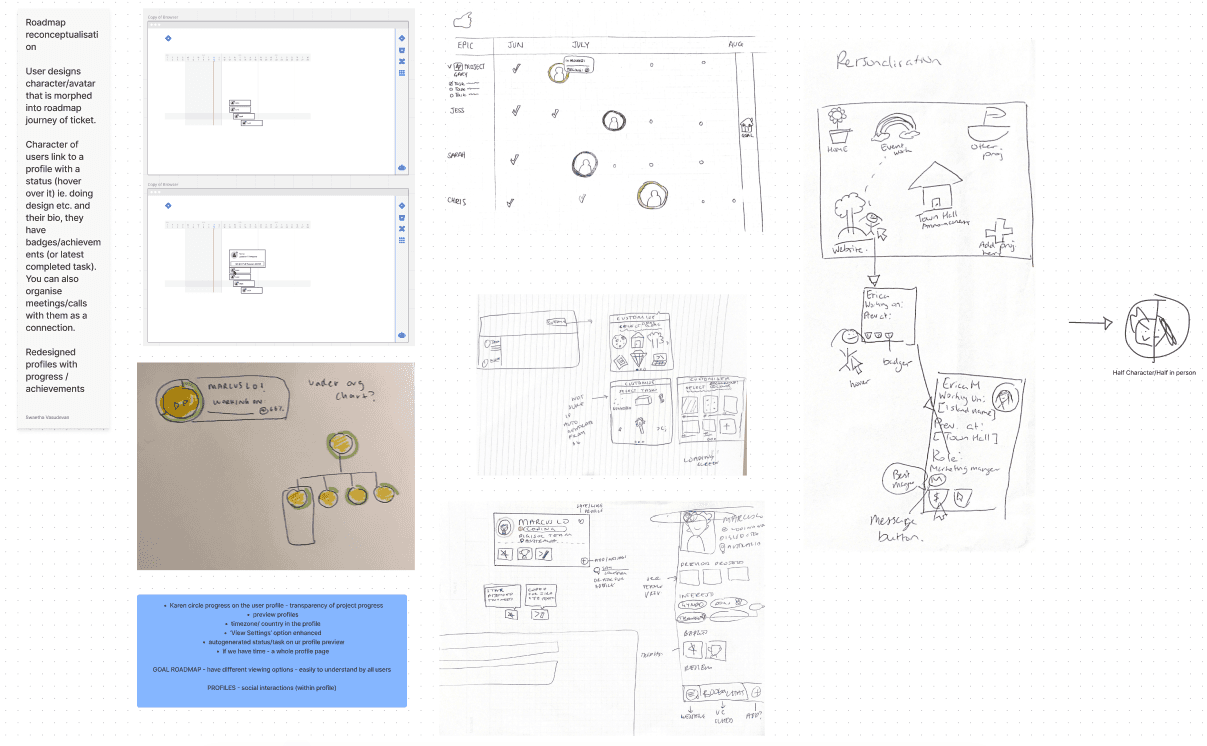
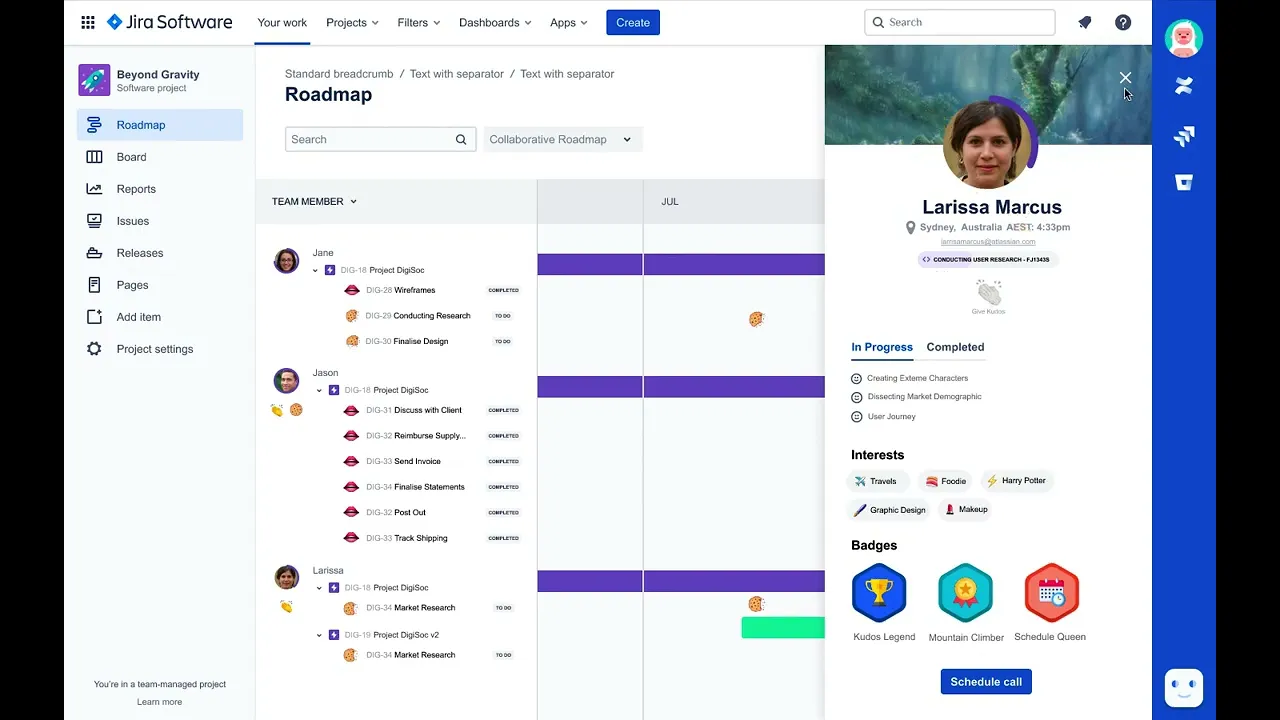
Designed to help users better understand team progress in distributed settings, live updates appear on user profiles as tasks are completed, making teamwork and collaboration more visible. Included are auto-generated updates on a user’s current activity and completed tasks. In addition, we expanded the ‘view settings’ and introduced new roadmap display options.


The redesigned user profiles add a stronger sense of individuality, allowing users to express themselves within a distributed workforce.
Key Takeaways

Key Takeaways


Our strategy aimed to make Atlassian products more accessible to a broader audience beyond their core software users. We took a more user-centred approach by introducing personalised features that supported smoother cross-product integration and created a more seamless experience overall.


The value of the concepts were in showing a clear product direction under tight constraints, identifying ecosystem-level friction, translating insights into a coherent concept, and using lightweight testing to refine the experience before presentation.


Some of my key takeaways include:

  • Test with the right users. Our lightweight testing helped uncover confusion in the interaction model, but feedback from people who regularly use Atlassian products would have given us a better sense of which parts of the concept were actually valuable.

  • Clear framing leads to better concepts. This project showed me how important it is to synthesise messy inputs, make decisions with intention, and prioritise the ideas that solve the most important user need.


In future, I would aim to conduct more thorough research to better understand pain points across different user segments and make more informed design decisions. This experience was especially valuable because it gave me experience designing across multiple products, which strengthened my understanding of different contexts, core product propositions, and the need to balance consistency with flexibility in a larger system. Overall, this opportunity gave me valuable lessons that will continue to shape how I design meaningful user experiences in future product work.


Our strategy aimed to make Atlassian products more accessible to a broader audience beyond their core software users. We took a more user-centred approach by introducing personalised features that supported smoother cross-product integration and created a more seamless experience overall.


The value of the concepts were in showing a clear product direction under tight constraints, identifying ecosystem-level friction, translating insights into a coherent concept, and using lightweight testing to refine the experience before presentation.


Some of my key takeaways include:

  • Test with the right users. Our lightweight testing helped uncover confusion in the interaction model, but feedback from people who regularly use Atlassian products would have given us a better sense of which parts of the concept were actually valuable.

  • Clear framing leads to better concepts. This project showed me how important it is to synthesise messy inputs, make decisions with intention, and prioritise the ideas that solve the most important user need.


In future, I would aim to conduct more thorough research to better understand pain points across different user segments and make more informed design decisions. This experience was especially valuable because it gave me experience designing across multiple products, which strengthened my understanding of different contexts, core product propositions, and the need to balance consistency with flexibility in a larger system. Overall, this opportunity gave me valuable lessons that will continue to shape how I design meaningful user experiences in future product work.


"As distributed teams grow, so does the need for tools that encourage open communication in real-time."

"As distributed teams grow, so does the need for tools that encourage open communication in real-time."

Ah Nee Brown, Atlassian

Read more work

Created by Samantha Yun ©2026

Samantha Yun

Created by Samantha Yun ©2026

Samantha Yun

Created by Samantha Yun ©2026

Samantha Yun