Gather | Scheduling platform


I designed a product concept for a common social problem: once friends move into full-time work and adult commitments, finding shared time to socialise meaningfully becomes unexpectedly difficult. In practice, many groups still coordinate manually in chat threads or use tools built for formal scheduling, neither of which fits casual, changing social plans particularly well.


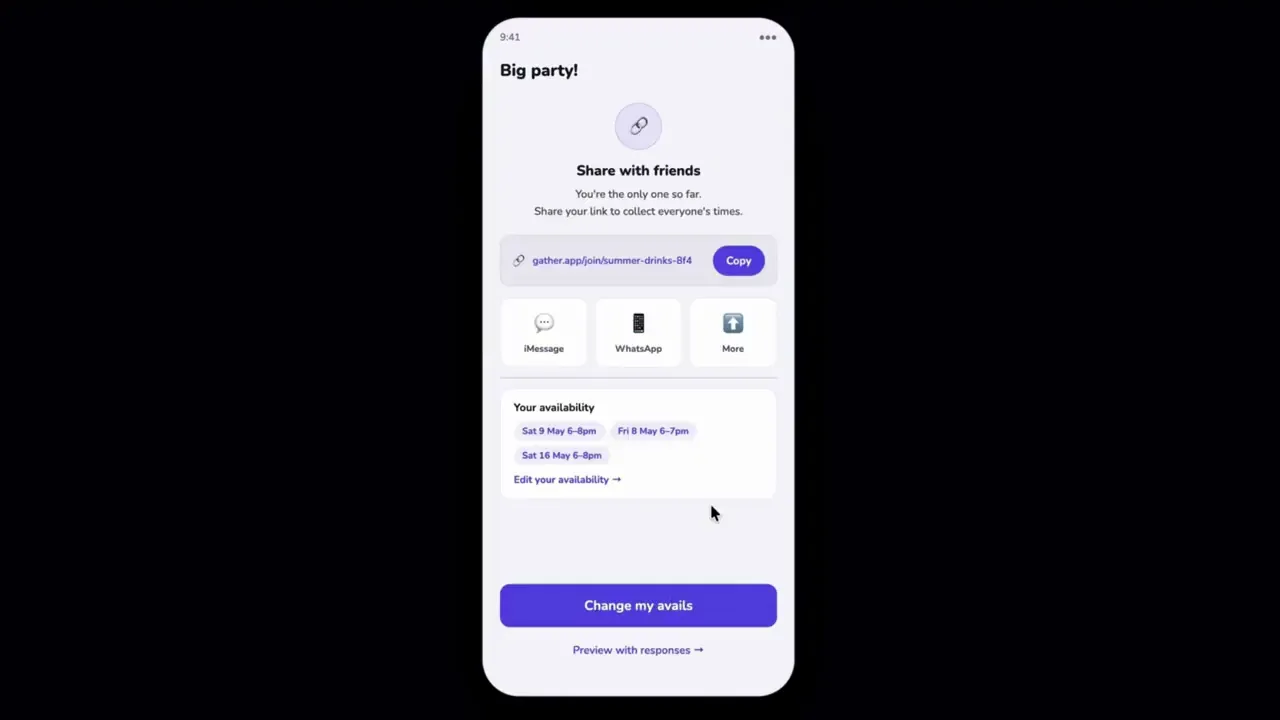
This concept focused on helping users find overlapping free time quickly, adapt to last-minute changes, and share broad availability instead of full personal calendars. Informed by a mix of lived behavior, competitive review, and desk research this highlighted that friendship maintenance matters, social leisure planning is shaped by other people’s constraints, and that existing products often optimise either for formal scheduling or for high-transparency calendar sharing.

About

Organisation: Side Project

Role: Product Designer, created with ClaudeAI

Skills: User Research, Prototyping, UI Design, Concept Design, User Testing

Timeline: 2 weeks
Identifying the problem

Identifying the problem


“How might we support quick, low-effort coordination for friends whilst protecting personal privacy?”


The core issue was not that people lacked ways to message each other. The issue was that coordination itself was messy.

Common workarounds like Messenger polls and scheduling tools such as When2Meet helped to an extent, but each came with trade-offs. Chat-based planning often required repeated manual follow-up, whilst dedicated scheduling tools could feel too utilitarian for casual social use.


Together, this pointed to a clear gap in the experience. Social planning is rarely individual. People coordinate around others preferences, constraints, and convenience, which often makes planning slower and more complex¹.


Friends needed a lightweight way to coordinate availability that was easier than chat, less invasive than calendar sharing, and better suited to casual social planning.


“How might we support quick, low-effort coordination for friends whilst protecting personal privacy?”


The core issue was not that people lacked ways to message each other. The issue was that coordination itself was messy.

Common workarounds like Messenger polls and scheduling tools such as When2Meet helped to an extent, but each came with trade-offs. Chat-based planning often required repeated manual follow-up, whilst dedicated scheduling tools could feel too utilitarian for casual social use.


Together, this pointed to a clear gap in the experience. Social planning is rarely individual. People coordinate around others preferences, constraints, and convenience, which often makes planning slower and more complex¹.


Friends needed a lightweight way to coordinate availability that was easier than chat, less invasive than calendar sharing, and better suited to casual social planning.

Discovering the space

Discovering the space


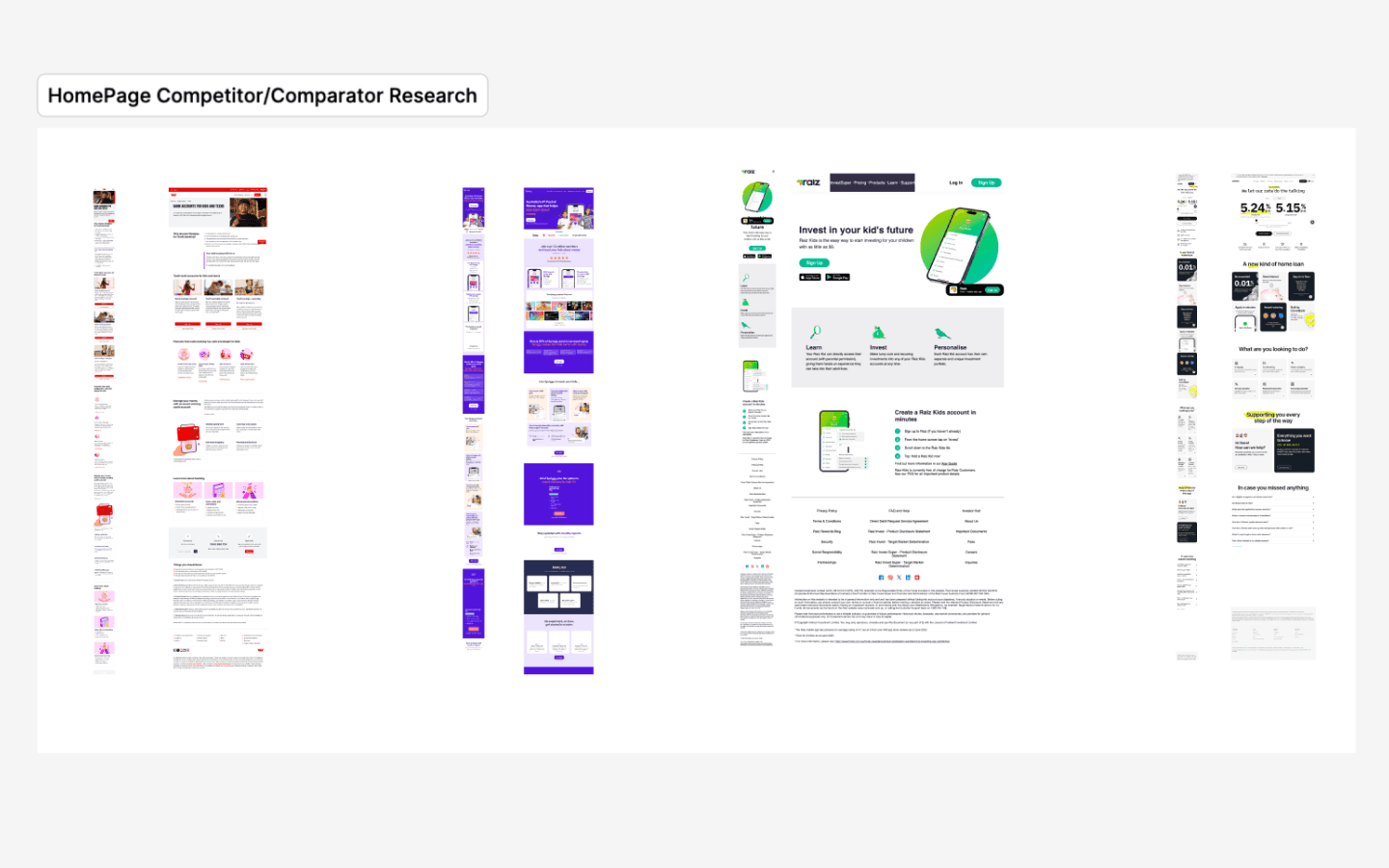
To understand the opportunity more clearly, I explored existing planning behaviours, reviewed products already used for coordination, and looked at the broader social context around group planning. Messaging platforms supported discussion well, but still left people to manually gather and compare availability. Scheduling tools made overlap easier to see, but often felt too functional with a lack of flexibility.


This revealed a gap between chat and scheduling. People needed a lightweight coordination flow that added enough structure to reduce back-and-forth, without making the process feel overly formal or invasive.


To understand the opportunity more clearly, I explored existing planning behaviours, reviewed products already used for coordination, and looked at the broader social context around group planning. Messaging platforms supported discussion well, but still left people to manually gather and compare availability. Scheduling tools made overlap easier to see, but often felt too functional with a lack of flexibility.


This revealed a gap between chat and scheduling. People needed a lightweight coordination flow that added enough structure to reduce back-and-forth, without making the process feel overly formal or invasive.

Concept design

Concept design


———-


———-

⭐️

Connect to Content

Add layers or components to make infinite auto-playing slideshows.

Results

Results


  • Increased homepage conversion rate from 3.3% to 8.7% (a 164% increase)

  • Reduced homepage bounce rate from 21% to 8% (a 62% decrease)

  • Increased average views per session from 1.9 to 2.2 (a 16% increase)

  • Reduced overall site bounce rate from 17.43% to 9.24% (a 47% decrease)


Note: to reduce the impact of seasonality and campaign traffic, results were compared using BAU periods before and after the uplift.


Reflecting on this design uplift, one of my key takeaways was that constraints can play an important role in shaping design strategy. Working within HubSpot meant prioritising improvements that were practical and achievable, rather than idealised. It also reinforced the value of using available data to guide prioritisation when research is limited. As a result, validating underlying assumptions through user research and implementing behavioural tools like Hotjar became an important next step in future projects.


  • Increased homepage conversion rate from 3.3% to 8.7% (a 164% increase)

  • Reduced homepage bounce rate from 21% to 8% (a 62% decrease)

  • Increased average views per session from 1.9 to 2.2 (a 16% increase)

  • Reduced overall site bounce rate from 17.43% to 9.24% (a 47% decrease)


Note: to reduce the impact of seasonality and campaign traffic, results were compared using BAU periods before and after the uplift.


Reflecting on this design uplift, one of my key takeaways was that constraints can play an important role in shaping design strategy. Working within HubSpot meant prioritising improvements that were practical and achievable, rather than idealised. It also reinforced the value of using available data to guide prioritisation when research is limited. As a result, validating underlying assumptions through user research and implementing behavioural tools like Hotjar became an important next step in future projects.

Read more work

Created by Samantha Yun ©2026

Samantha Yun

Created by Samantha Yun ©2026

Samantha Yun

Created by Samantha Yun ©2026

Samantha Yun